
Commercial air conditioning, designed around your building and fitted around your business
For offices, shops, restaurants, server rooms and industrial units across Devon, Somerset, Dorset and Cornwall.
Tell us about the building and we will come and survey it properly.
- Commercial air conditioning designed, installed, serviced and repaired across Devon, Somerset, Dorset and Cornwall
- Real project values published below, not 'prices on application'
- F-Gas certified and Refcom registered, so we handle the compliance servicing as well as the installation
- A Daikin D1 partner buying direct from the manufacturer, which matters more in a year like this one
- We will travel for the right job
Some of the things we hear from commercial building owners and managers
We design and install commercial air conditioning
Get a building that drives productivity instead of fighting it
You deserve a building that works all year, a system sized for what your space is actually used for, and paperwork that stands up when somebody asks to see it.
Server rooms, factory processes and food businesses need their temperatures held steady too, and the same design care applies. Here is what you get.
- Every space surveyed and sized on its own, because an office, a server room and a restaurant kitchen are three different problems
- Priced more than one way, so you can see for yourself whether one outdoor unit or several works out better for your building and your budget
- Installed around your working week, not through the middle of it
- Serviced and documented properly, including F-Gas leak checks and logbooks
- Equipment ordered direct from Daikin, so your project is not waiting on whatever a wholesaler happens to have in stock
Our lead engineer
Your project is led by Declan Taylor, start to finish
I started as an apprentice with a commercial refrigeration company in Devon sixteen years ago and trained as an electrician alongside it. Commercial work is where I learned the trade and it is still half of what I do.
'One month it is a server room, the next a fourteen-unit shop floor. The buildings change all the time. The level of care does not.'
Declan Taylor, Elevate South WestF-Gas certified, and Elevate is registered with Refcom, one of the two registrations a company must hold to work on this equipment legally. Professional indemnity and tradesman insurance in place.
Elevate also designs and installs heat pumps and underfloor heating, so if your building needs more than one of those, one company designs all of it.
Recent work
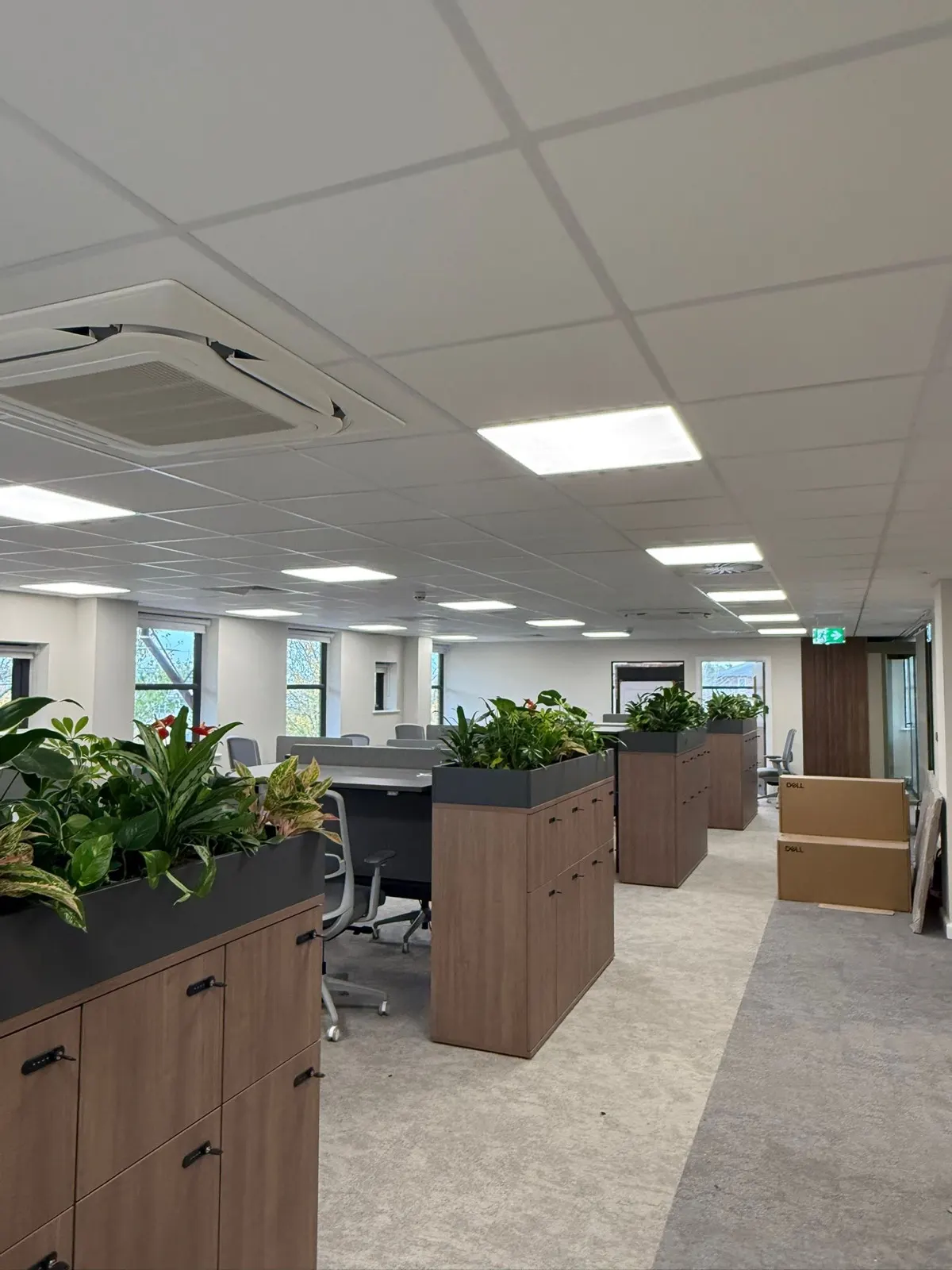
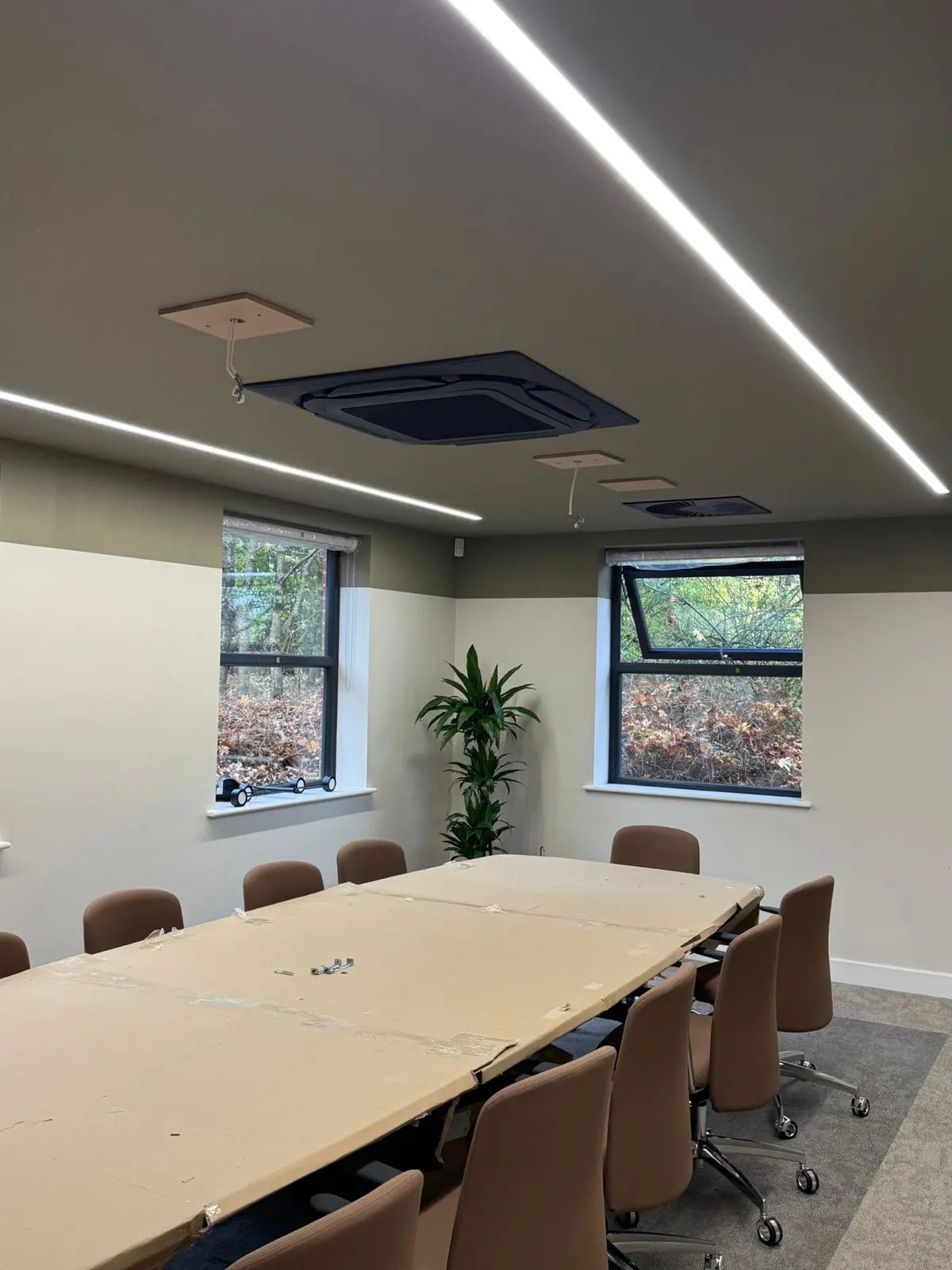
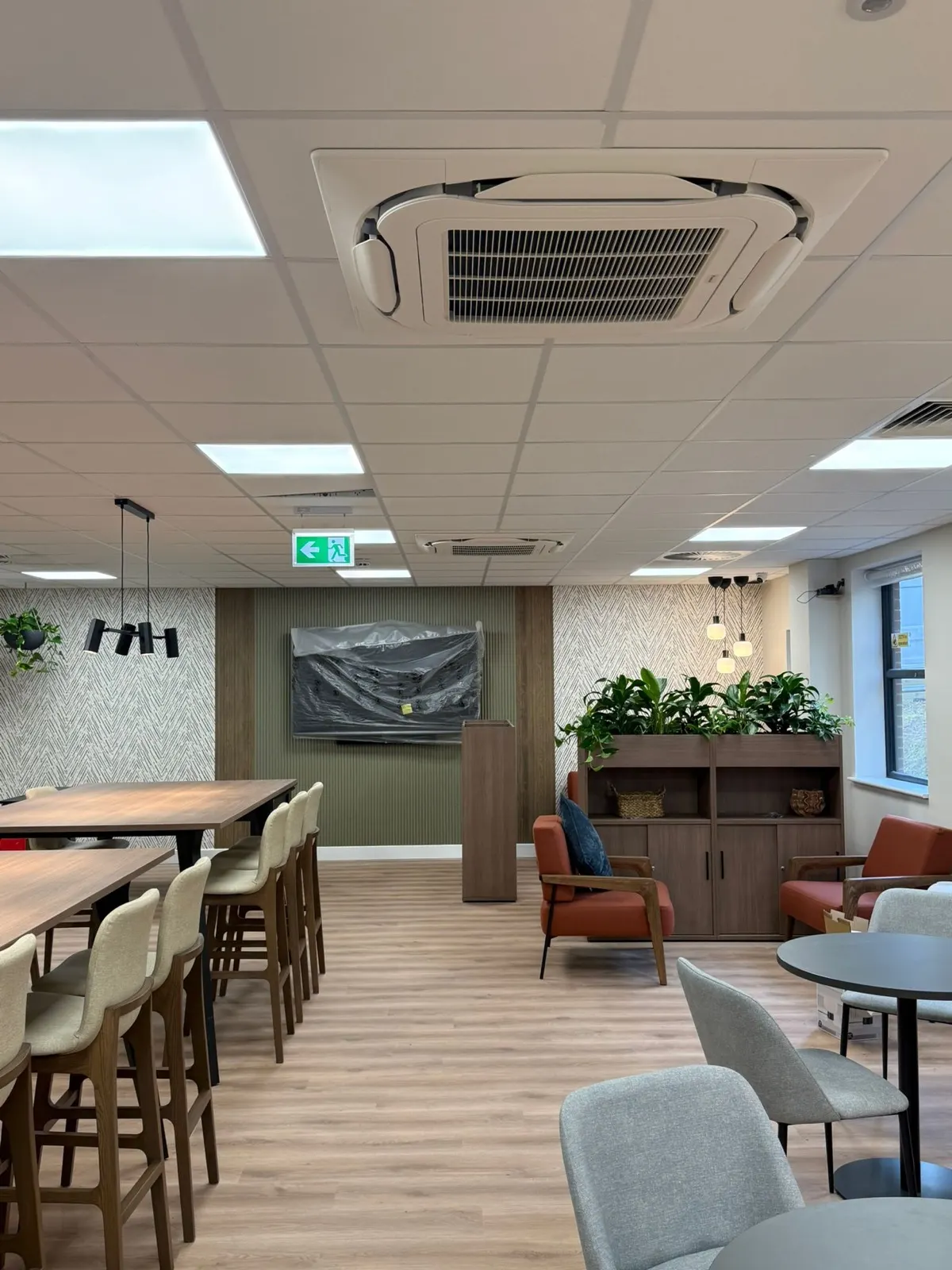
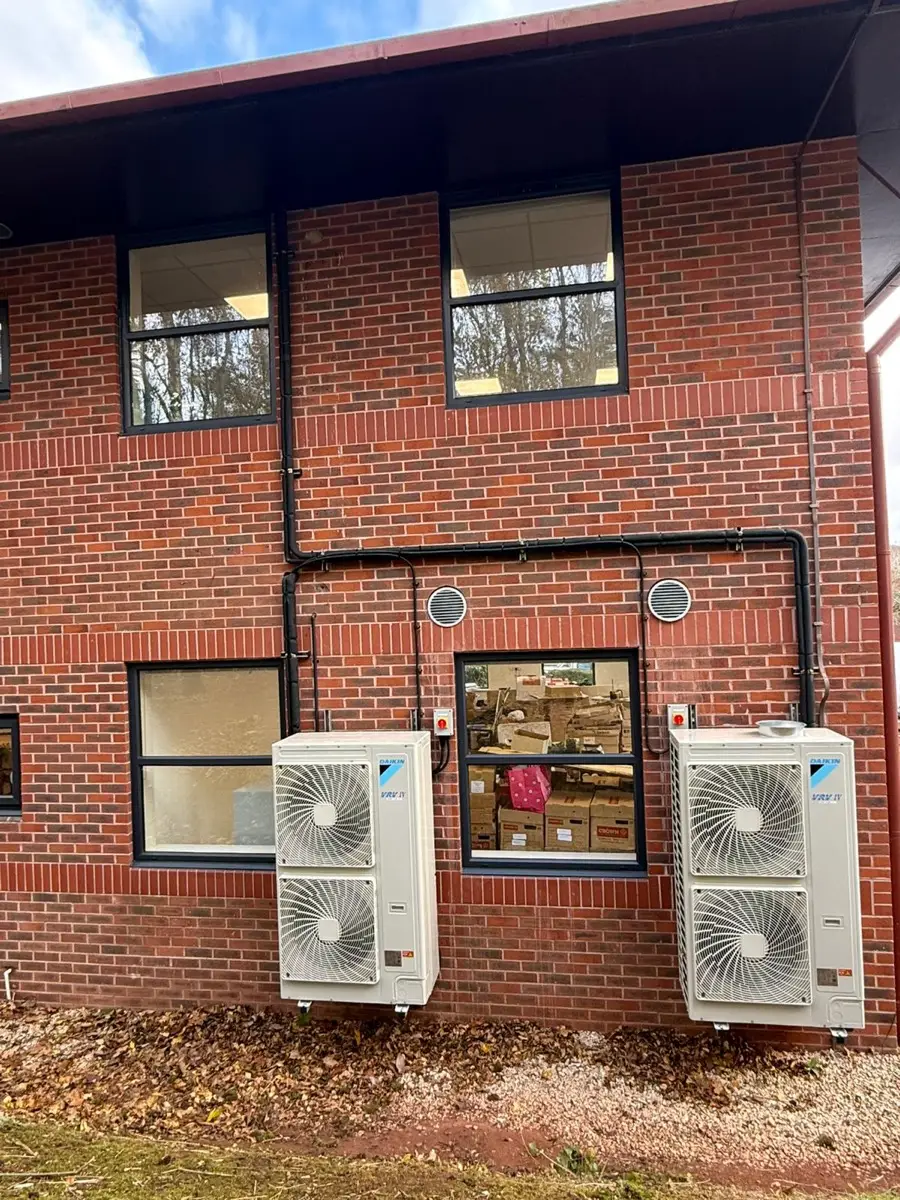
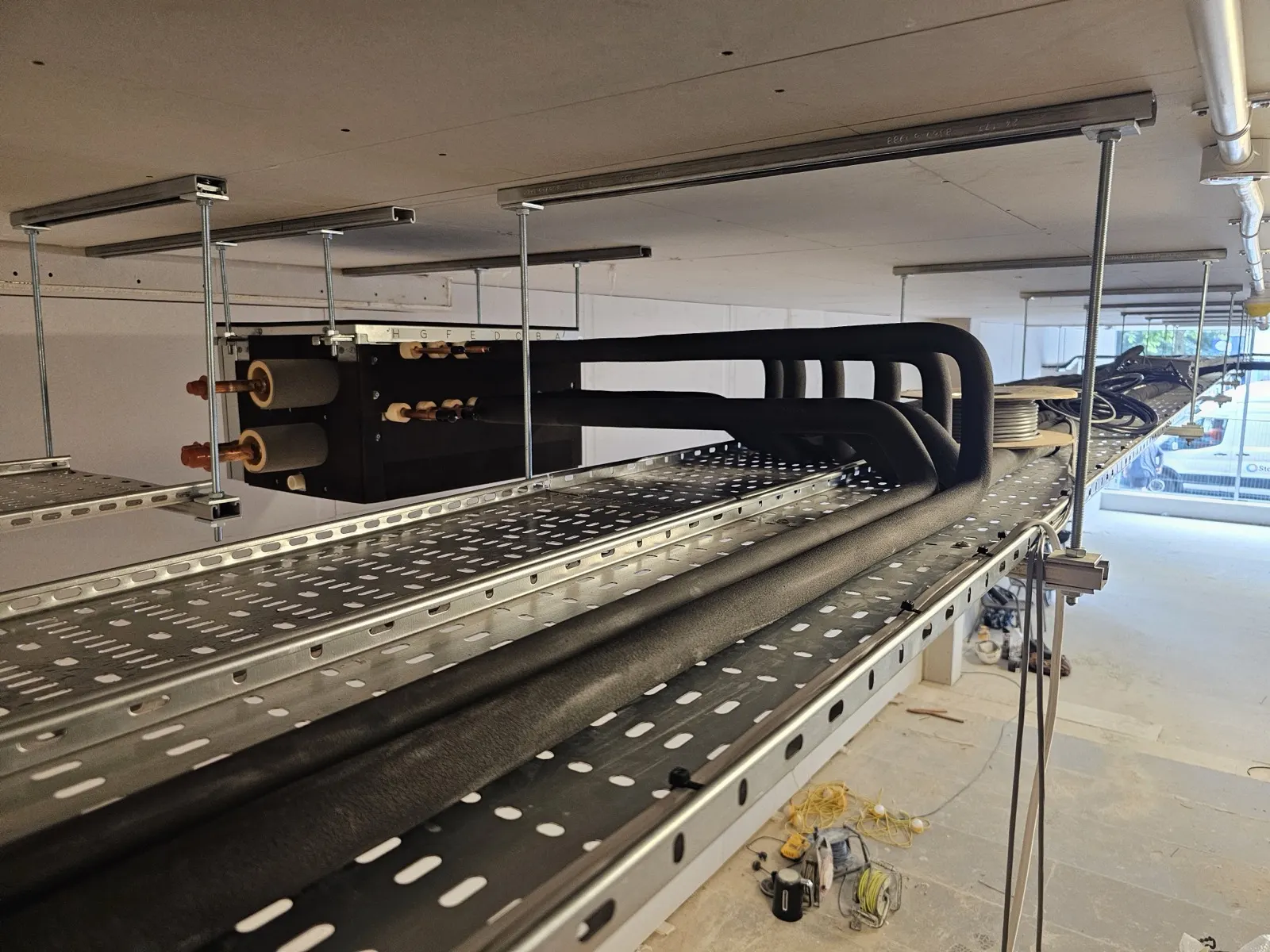
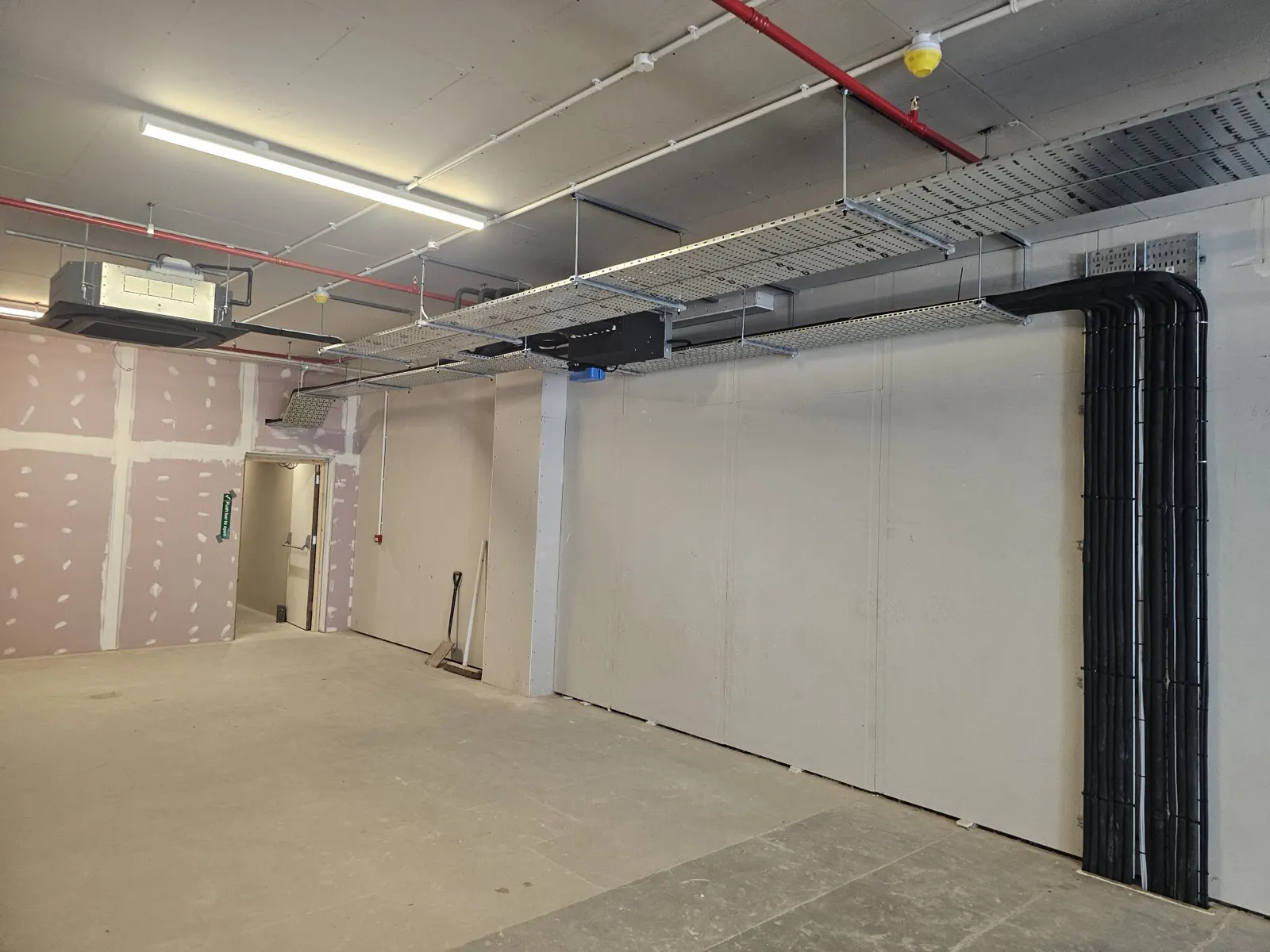
Recent commercial installations
Our own photographs, taken on site. No stock images anywhere on this website.
How it works
Three steps to a building your people can work in
Get in touch
Call or fill in the form, whichever suits you.
We survey it and design the system
Every space measured and sized, then a fixed price, more than one way where that helps.
We install it around your business
Then it is serviced, documented and looked after by the same people who fitted it, for as long as you have it.
Prices
What commercial air conditioning costs: real projects
Nobody in this trade publishes commercial prices. Here are two of ours.
A medium-sized open-plan office, £13,000 to £14,000. One open space, three indoor units.
A large retail building in central Exeter, around £78,000. A substantial U-shaped shop floor with storerooms and offices below it, run from a single eighteen horsepower outdoor unit weighing about 320 kilos, feeding roughly fourteen indoor units.
What moves the number most
How many outdoor units the building can take
One outdoor unit serving everything costs considerably more than splitting the load across several, because it must be sized to run the whole building at once.
On the Exeter job that single decision accounted for a large part of the figure. Ask us to price it both ways.
What the building is made of, and what service routes exist
Solid construction with nowhere to run pipework is a different job from a building with ceiling voids and risers.
Pipe run distances
Standard equipment handles around twenty metres. Longer runs need different, more expensive units.
What the space is for
A server room, a restaurant kitchen and an open-plan office plainly need different things, and the equipment follows.
What's included
What you get, and why your business keeps running while we fit it
A design built around how your building is used
Not a unit count taken off the floor area. Every space is calculated separately, and a room full of servers is treated as a room full of servers.
Very little disruption to your working day
Most commercial buildings have suspended ceilings, voids and risers, which means the pipework has somewhere to go and disappears into the fabric of the building. A ceiling tile lifts, the work happens above it, and the tile goes back. Your people carry on.
Equipment that suits the space rather than sticking out of it
Ceiling cassettes, under-ceiling units and ducted systems all become options once there is a void to put them in, so the finished result is often close to invisible.
Better warranty terms, because your equipment comes direct from Daikin
No wholesaler in the middle, and one point of contact if anything ever needs sorting.
Servicing and documentation by the people who installed it
Including systems you inherited from somebody else.
The law on refrigerant leaks
If your system holds enough refrigerant, leak checks are the law
For a house, an annual service is about efficiency and keeping the warranty valid. For a business it becomes a legal duty.
Once a system holds five tonnes of CO2 equivalent or more of refrigerant, it must be leak checked at set intervals and the checks recorded.
Five tonnes sounds enormous. It is about 2.4kg of R-410A, the refrigerant in a great many ordinary commercial systems, so buildings cross that line far more often than owners realise.
- 5 to 50 tonnes CO2 equivalent: at least once a year
- 50 to 500 tonnes: at least every six months
- 500 tonnes and above: at least every three months
Fit an automatic leak detection system and those intervals double.
And the responsibility is yours, not your installer's. In law the duty sits with the operator: whoever exercises actual control over the equipment, in most buildings the owner or occupier.
Contractors share responsibility for stopping leaks, but getting the checks done and keeping the records sits with you. Leased buildings are the complicated case: it depends what the lease says.
If nobody has ever handed you a logbook for your building's air conditioning, sort that before somebody asks to see one.
We carry out compliance servicing and keep the documentation properly, on our own installations and on systems we have inherited.
Supply and lead times
Why we work directly with Daikin, and what that gets you
We think Daikin build the best air conditioning equipment in the field, so we buy it from them directly rather than through a wholesaler. That relationship is formal: Elevate is a Daikin D1 partner, a status you earn by volume.
What it means for you is speed and answers. Your equipment is ordered straight from the people who made it, and when something needs chasing there is nobody in the middle to chase through.
That has counted for a great deal in 2026. In the summer, one of the world's largest air conditioning manufacturers moved a factory and it did not go smoothly.
Demand shifted to everyone else, stock levels followed, and industry lead times have run from a week to two months on equipment that normally arrives within days. Buying direct has kept our projects moving.
If you are planning a fit-out or a refurbishment, talk to us earlier than you think you need to and we will build the real lead times into your programme.
Frequently asked questions
What does commercial air conditioning cost?
Do you work on systems you did not install?
How far do you travel for commercial work?
Is annual servicing a legal requirement?
Who is legally responsible for F-Gas leak checks, me or my installer?
Can you work around an occupied building?
Do you install air conditioning in server rooms?
Where our information comes from
Sources
The leak checking thresholds, intervals and responsibilities on this page come from:
- Checking F gas equipment for leaks, GOV.UK. Thresholds of 5, 50 and 500 tonnes CO2 equivalent, the corresponding intervals, the doubling where automatic leak detection is fitted, and that responsibility rests with the user of the equipment.
- Regulation (EU) No 517/2014, as retained in Great British law. The definition of the operator as the person exercising actual power over the technical functioning of the equipment.
Correct at July 2026. The regulations change from time to time, so if you are relying on this for a compliance decision, check the current GOV.UK guidance or ask us.